Organic content for foreign trekkers
Mountain Routes sells treks in Nepal to people in Europe, North America and Australia. The whole problem is that the audience has never been here and is deciding whether to trust a company they found on a phone.
- Content strategy, Short-form video, Design, Monthly reporting
- 2026
- Ongoing
- CapCut · Figma · TikTok · YouTube · Instagram · Facebook
Performance figures withheld pending permission.
Content for people who haven't been here
A trekking company's local audience already knows what Everest Base Camp involves. A foreign audience is asking quieter questions: is this safe, are these people real, what happens if something goes wrong at altitude, and can I actually do this.
So the content answers those instead of posting mountains. Itineraries laid out clearly. The guides, as people. The practical detail nobody puts on a poster because it isn't beautiful.
Most of it is short-form video, produced in volume: reels week after week rather than an occasional polished piece. Consistency is what makes a small account look like a real company, and volume is the only way to get consistency.
Why the itineraries look like this
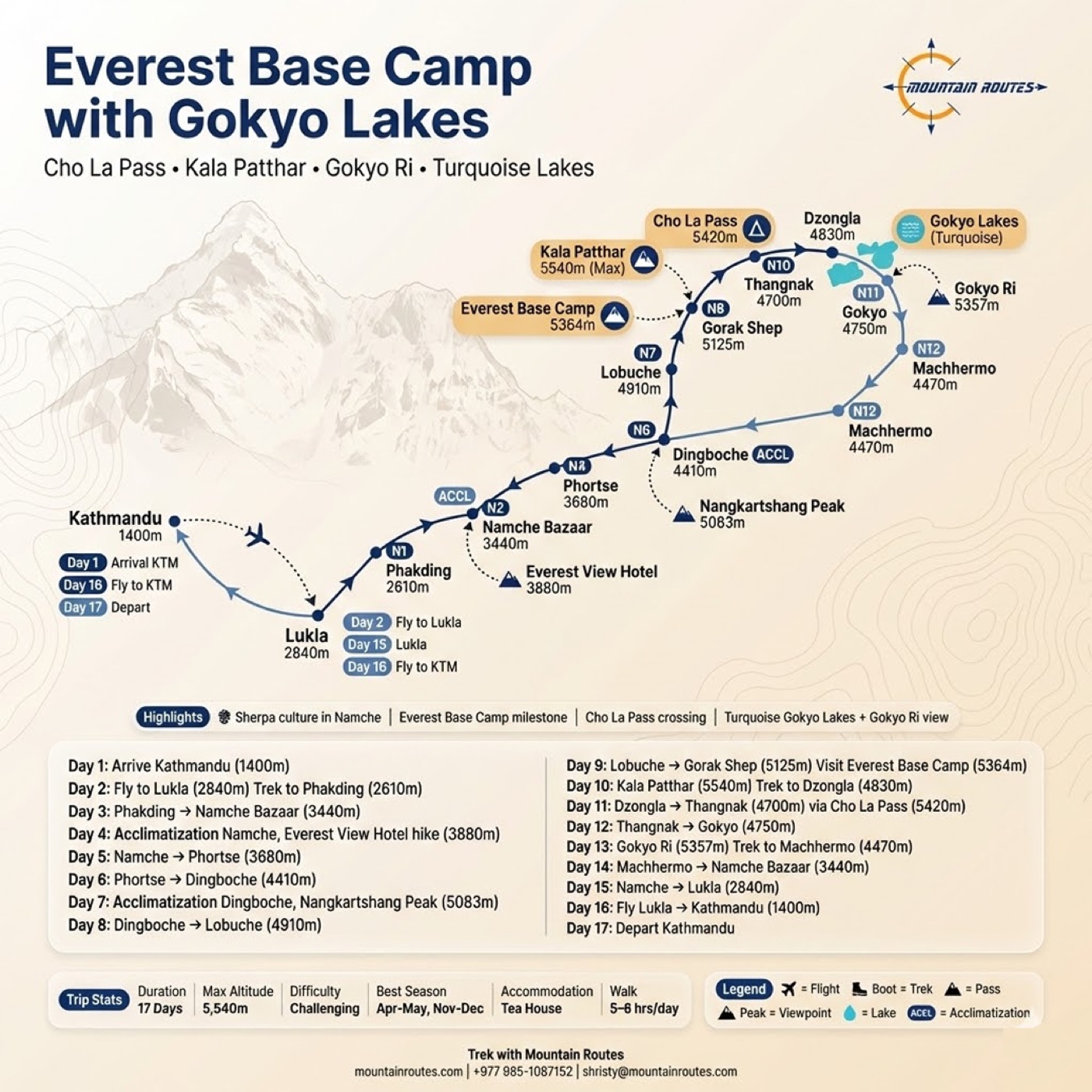
A trekking post that's just a photograph of a mountain competes with every other photograph of a mountain. Someone deciding whether to spend three weeks and a lot of money in a country they've never visited isn't short of scenery. They are short of specifics.
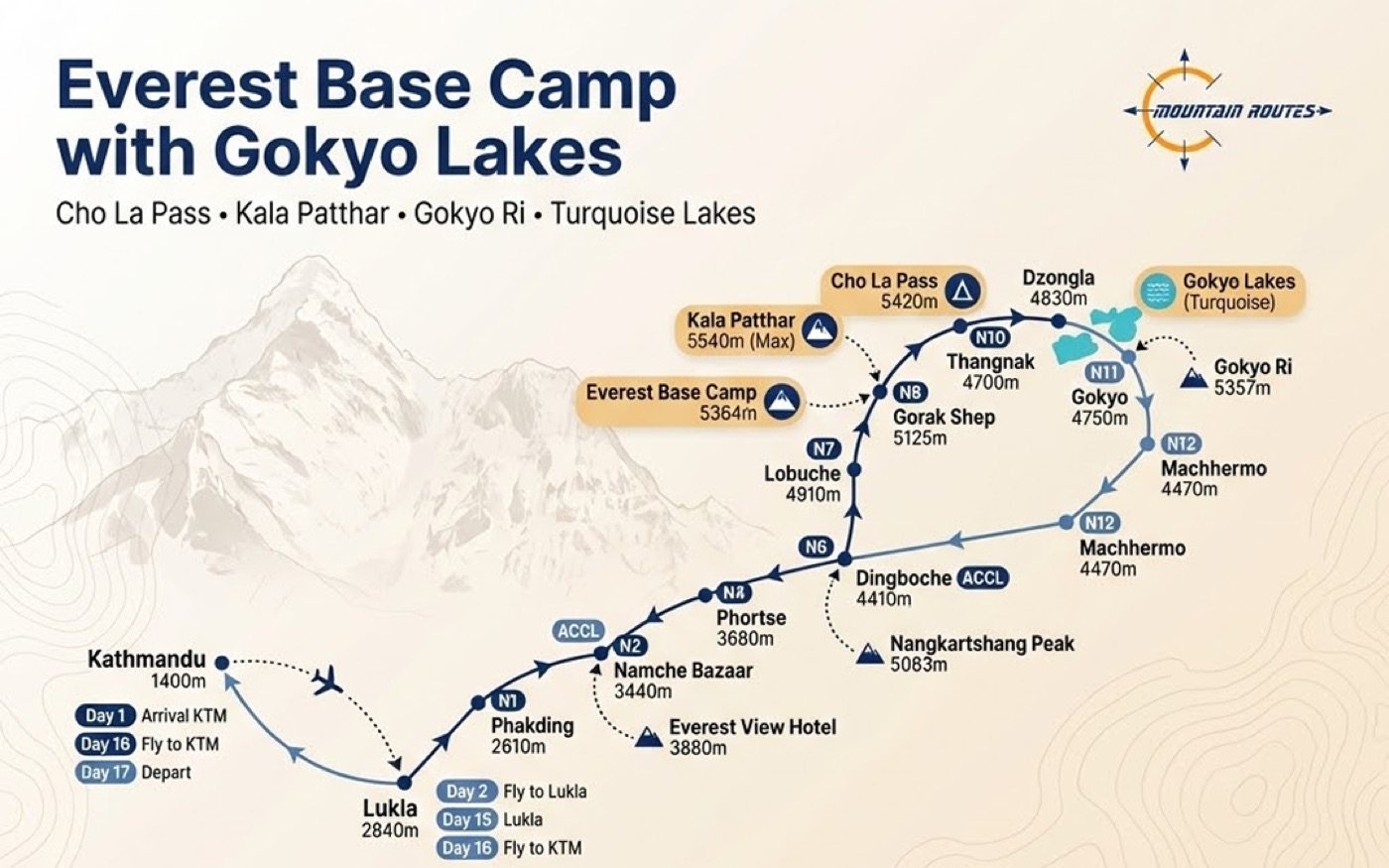
So the format leads with the map and the numbers. Altitudes on every stop, acclimatisation days marked, the flight legs drawn separately from the walking. It's denser than a normal social post on purpose. Someone weighing up three weeks and a lot of money reads that density as a company that has run the route before, which is the whole thing being sold.
The cadence
- 3 to 5 videos a day, the same set on both
- 1 to 2 a day, the same set on both, different from the TikTok set
- 350 to 400 posts across the four platforms
- 2,800+ uploads. That counts each platform separately and isn't a count of unique videos, because one edit goes to two places
- Static festival posts, in the same house style as the video thumbnails
How one person ships at that rate
The number above is only interesting if the pipeline behind it is honest, so: edits are cut in CapCut, thumbnails are built in Figma against a fixed template, and captions and the occasional generated still come from an assistant rather than being written from scratch each time. Monthly reporting figures are pulled and summarised the same way.
None of that decides what to post. It removes the part of the job that's retyping, which is what makes a daily cadence survivable for one person alongside a company. The judgement about which route, which season and which objection a foreign trekker is actually carrying is the part that can't be automated, and it's the part that makes the account work.
Reporting to the owner every month
Every month the owner gets a written performance report. Not a screenshot of a dashboard, but an actual account of what was posted, what worked, what didn't, and what changes next month.
That habit came out of the customer-success year. The reporting is often what keeps the relationship, not the work itself.